Published November 4, 2026
In December 2025, around Christmas, a fire destroyed a Camarillo family’s home while they were away. Their belongings were lost with it, including their furniture and the Christmas gifts in the house. The cause of the fire has not been determined. Golden Coast Claims is representing the family on their insurance claim, which is ongoing.
A Family’s Home Lost to Fire
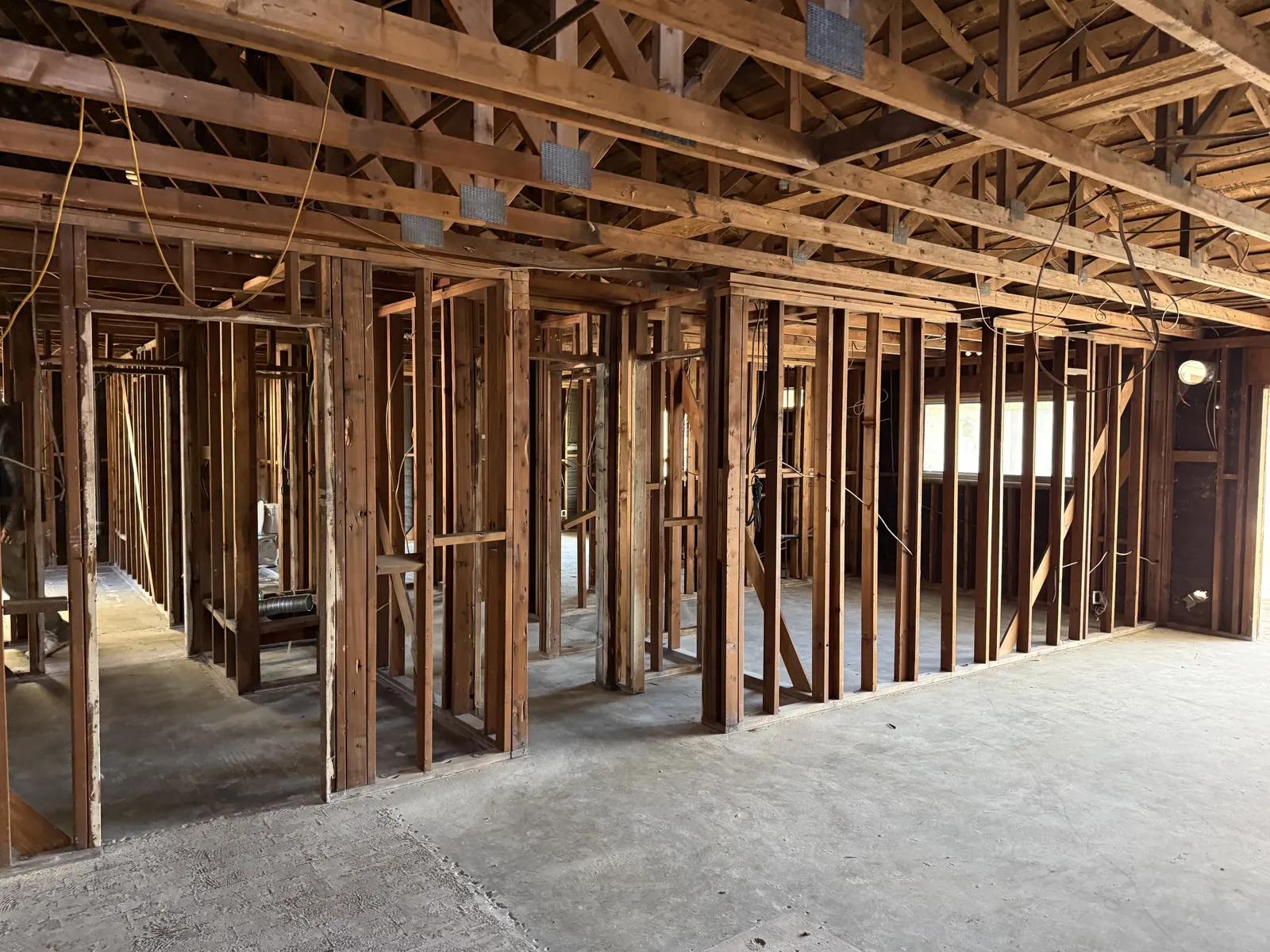
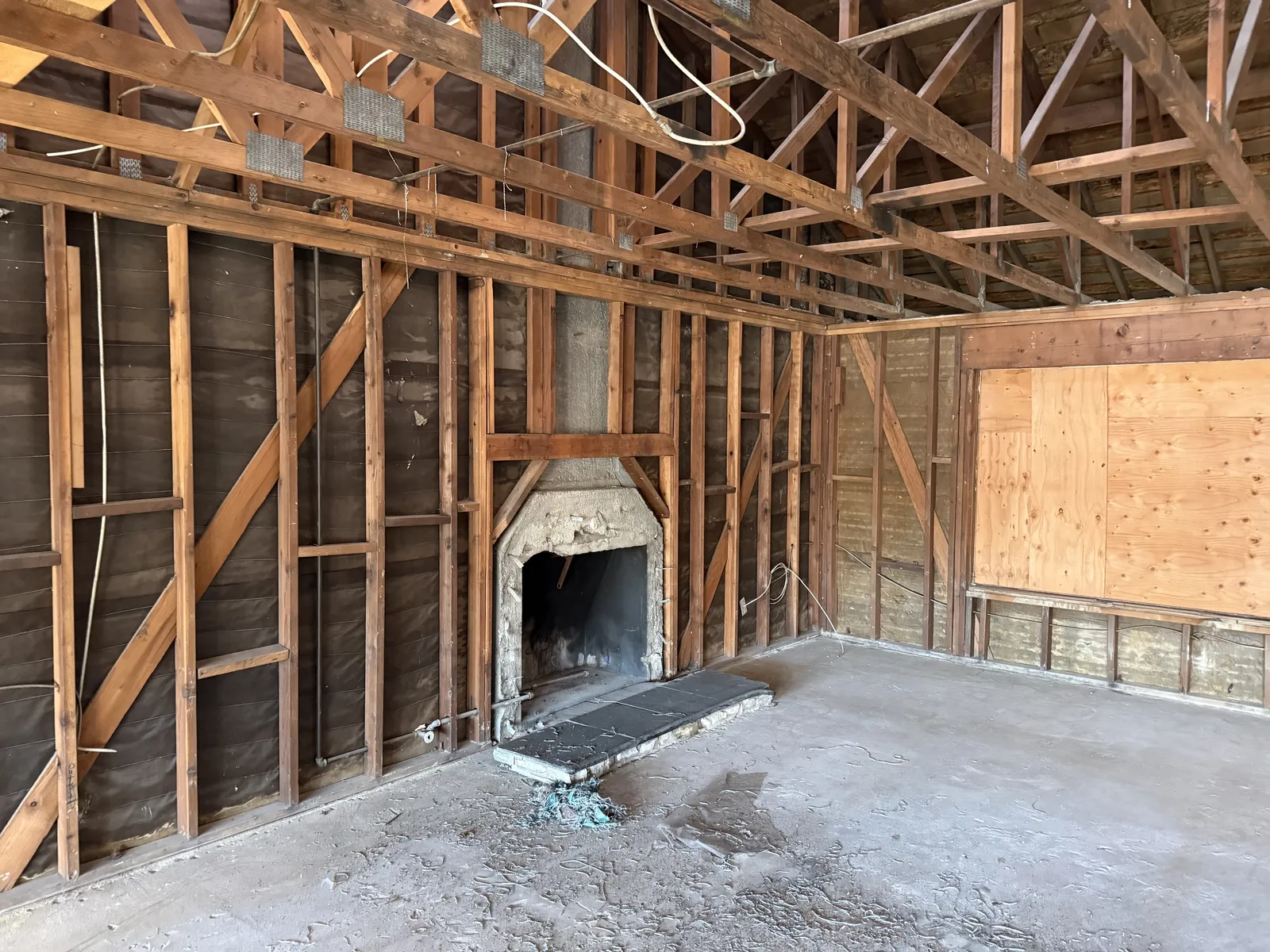
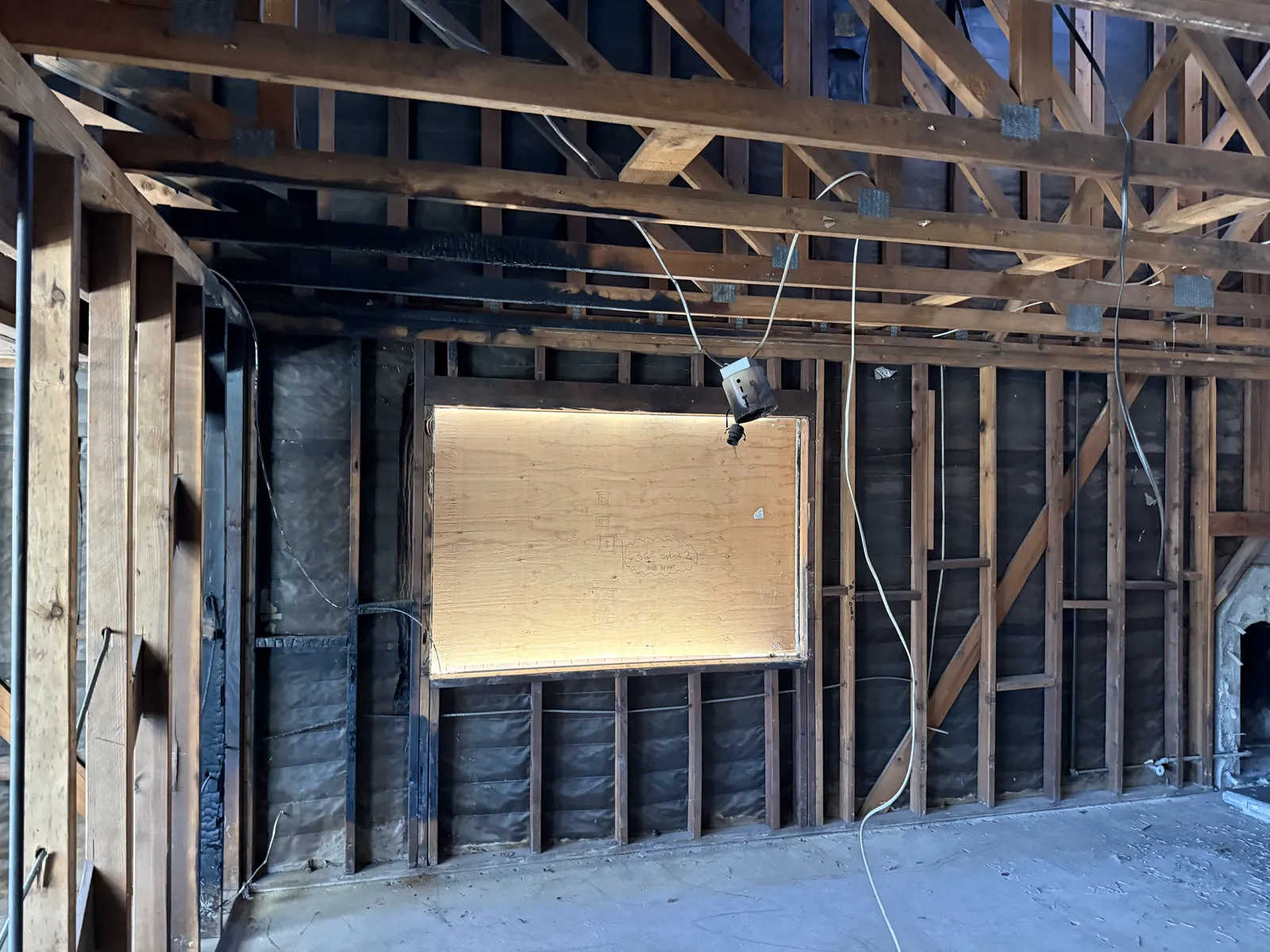
The fire destroyed both the house and what was inside it, from the furniture to the gifts waiting for the holiday. The photos on this page show the home after the interior was opened up to its framing.
A total loss changes the shape of a claim. Instead of repairing a few rooms, the family is looking at rebuilding a home and replacing nearly everything in it. Each of those pieces has to be documented, valued and presented to the insurance company.
Documenting the Building and Its Contents
Our work for the family includes reviewing their policy for the coverage that applies to the loss and documenting both the structure and their personal property.
These are separate parts of a homeowners claim. Dwelling coverage applies to the house itself: its framing, roof, systems and finishes. Personal property coverage applies to what was inside. Each part generally has its own limit and its own way of being valued, so each needs its own record.
When a home is destroyed, the contents record is often the hardest part. Receipts and the items themselves may be gone. An inventory is usually rebuilt room by room from memory, older photos and videos, bank and card statements, and online order histories, with a description, approximate age and replacement cost for each item. If the policy includes additional living expense coverage, keeping those receipts in their own file makes them easier to present.
Reviewing the Rebuilding Estimate
Rebuilding and replacement estimates are central to a total loss claim, and evaluating them against the insurance company’s assessment is part of our work on this claim.
An insurer’s estimate and a rebuilding estimate can differ for ordinary reasons: a missing line item, a different quantity, a lower grade of material, or pricing that does not reflect local construction costs. Comparing the two line by line separates missing work from price differences, which makes each question clearer to raise with the insurer.
How to compare an insurance estimate with a contractor estimate
Representing the Homeowners During the Claim
As public adjusters, we represent the family, not the insurance company. On this claim our work includes:
- Reviewing the policy for the coverage that applies to the fire.
- Documenting the structure and the family’s personal property.
- Developing and evaluating rebuilding and replacement estimates.
- Communicating with the insurance company on the family’s behalf.
- Reviewing the insurer’s assessment and negotiating toward a settlement.
The claim is still in progress, so there is no final result to report.
If Your Home Has Been Damaged by Fire
- Stay out of the property until fire officials or local authorities say it is safe to enter.
- Report the loss to your insurer and note the claim number and the name of each person you speak with.
- Keep a claim diary of calls, visits, requests and payments.
- Start your contents list early and gather any photos or videos taken inside the home.
- Keep receipts for temporary housing, meals and other added costs together.
- Ask the insurer to explain in writing any part of the policy or estimate you do not understand.
What a policy pays depends on its language and the facts of the loss.
Photos from this claim